

Exciting news! For the first time in over 50 years, humans are leaving low Earth orbit and heading back to the Moon with the Artemis II lunar flyby mission crew.
The four crew members consist of NASA astronauts Reid Wiseman, Christina Koch, Victor Glover and Canadian Space Agency astronaut Jeremy Hansen.
Artemis II is scheduled to take off around November 2024; fingers crossed that all goes as planned.
The Team
Wiseman, the commander of the mission, is a decorated naval aviator and test pilot, who was first selected to be a NASA astronaut in 2009.
A Baltimore native, Wiseman completed a 165-day trip to the International Space Station in 2014 and served as chief of the astronaut office before stepping down in November 2022, making him eligible for a flight assignment.
Koch, an electrical engineer, and veteran of six spacewalks, will be joining the team.
She holds the record for the longest single spaceflight by a woman, with a total of 328 days in space.
Koch also helped develop scientific instruments for multiple NASA missions and spent a year at the South Pole, which prepared her for the intensity of a Moon mission.
Glover, a naval aviator, who returned to Earth from his first spaceflight in 2021 after piloting the second crewed flight of SpaceX’s Crew Dragon spacecraft and spending nearly six months aboard the International Space Station, is also joining the crew.
Glover served in several military squadrons in the United States and Japan in the 2000s and completed test pilot training with the US Air Force.
Hansen, a fighter pilot, was selected by the Canadian Space Agency for astronaut training in 2009.
From London, Ontario, Hansen is one of only four active Canadian astronauts and recently became the first Canadian to be put in charge of training for a new class of NASA astronauts.
He will be the first Canadian ever to travel to deep space.
About This Mission
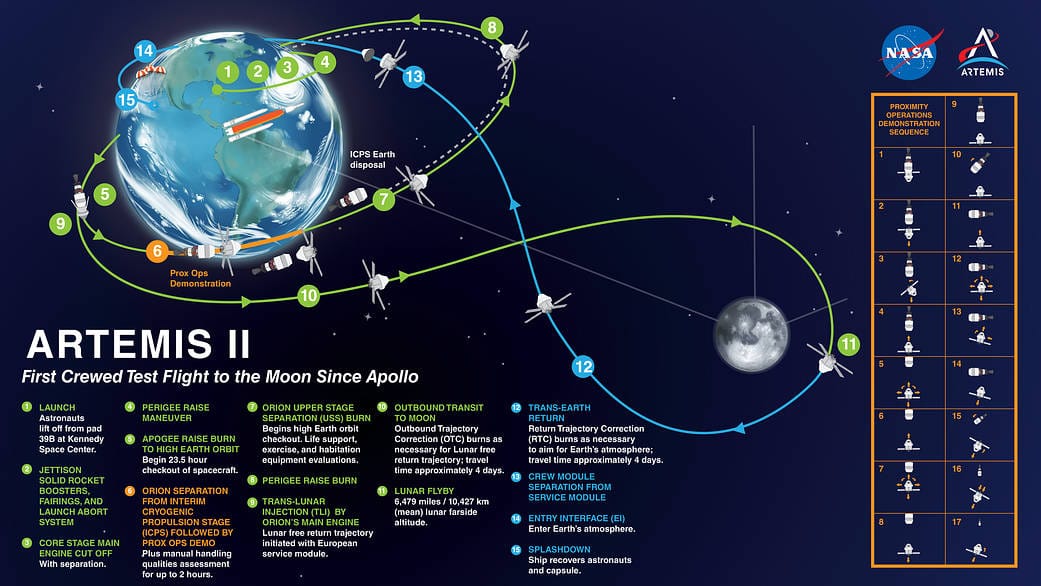
The Artemis II mission will build on the success of Artemis I, which was an uncrewed test mission that sent NASA’s Orion capsule on a 1.4 million-mile voyage to lap the Moon that concluded in December 2022.
The Artemis II crew members will launch atop a NASA-developed Space Launch System rocket from NASA’s Kennedy Space Center in Florida and will be expected to circle the Moon before returning to Earth for a splashdown landing in the Pacific Ocean.
Artemis II is expected to pave the way for the Artemis III mission later this decade, which NASA has vowed will put the first woman and person of color on the lunar surface.
It will also mark the first time humans will land on the Moon since the Apollo program ended in 1972.
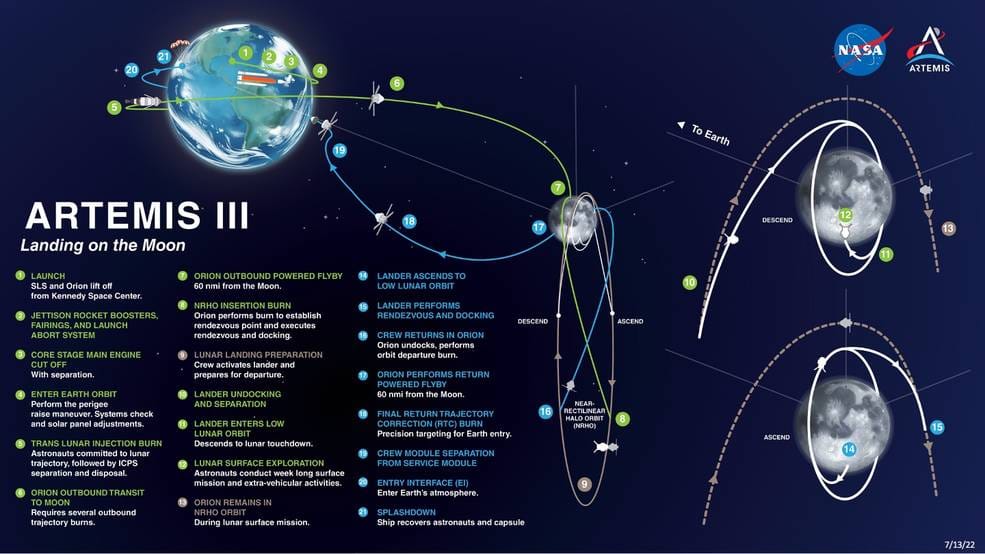
The Artemis program was designed to pave the way to establishing a permanent lunar outpost, allowing astronauts to live and work and go deeper into space long term as NASA and its partners map a path to sending the first humans to Mars.
So, let’s celebrate this moment in human history, and the exciting journey that will get us to Mars.
With the Artemis III mission set to take off later this decade, much of the technology it requires, like new spacesuits and a lunar lander, is still in development.
NASA is aiming for a launch date in late (November) 2024, but it might get pushed out to 2026 or later due to some delays.
NASA has been working towards returning people to the Moon for over a decade, and the Artemis program is designed to pave the way for establishing a permanent lunar outpost.
This will allow astronauts to live and work on the Moon for longer periods and go deeper into space, all while NASA and its partners map a path to sending the first humans to Mars.
Last Man On The Moon


Did you know that the last time a human left low Earth orbit was over 50 years ago?
The Apollo 17 mission was carried out in December 1972 and was commanded by astronaut Gene Cernan who was also the least man the leave the Moon.
But now it’s time to go again!
However, the Artemis II crew will not be allowed to land on the Moon; they will travel around it, similar to the Apollo 8 mission.
What’s exciting is that the crew of the following mission – Artemis III – will be diverse, with the first woman, person of color, and Canadian going on a Moon mission!
This mission will be a significant step towards achieving greater diversity in space exploration.
The Predecessor: Apollo 8
Speaking of Apollo 8, did you know that it was during that mission when astronaut Bill Anders took the iconic photo of Earth called “Earthrise”?
The photo helped raise awareness of environmental issues, and for the first time, we saw ourselves and our entire small planet from the outside.
Apollo 8 was a bold move, and it was done to avoid missing President Kennedy’s deadline to send humans to the Moon and bring them back safely during the 1960s.
Several test missions were canceled, and Apollo 8 was sent directly to the Moon, taking a huge leap in space exploration.
If you want to learn more about Apollo 8, check out this cool five-minute video:
If you want to learn more, this book is recommended:

Top image: The Artemis II lunar flyby mission crew members include (from left): NASA astronauts Christina Koch, Victor Glover, Reid Wiseman (foreground) and Canadian Space Agency astronaut Jeremy Hansen.


